Showing posts with label Essentials. Show all posts

Sunday, May 23, 2021

CINEMA ESSENTIALS


George O'Brien and Margaret Livingston in Sunrise: a Song of Two Humans (1927)


Cinema Essentials

In 1958 I sat in the Fox Theatre in Redondo Beach, California, and watched my first movie, Darby O'Gill and the Little People. Since then I have seen over 1,500 films.  What follows are lists of what I consider to be some of the essentials in the world of movies.  They might appear at first glance to be inconsistent with my lists of favorite movies.  But that is because I used different criteria for the essentials.  For instance, Foul Play (1978) and the original version of The Parent Trap (1961) are two of my all-time favorite movies, but they are far from essential.


A.

(Listings in this section are alphabetical.)

Paul Henreid and Humphrey Bogart
in Casablanca (1942)

31 Essential Films

8½ (1963) (d. Federico Felini)

All the President's Men (1976) (d. Alan J, Pakula)

Bicycle Thieves (1948) (d. Vittorio de Sica)

Casablanca (1942) (d. Michael Curtiz)

Chinatown (1974) (d. Roman Polanski)

Citizen Kane (1941) (d. Orson Welles)

City Lights (1931) (d. Charlie Chaplin)

Dr. Stranglove or: How I Learned to Stop Worrying and Love the Bomb (1964) (d. Stanley Kubrick)

Eternal Sunshine of the Spotless Mind (2004) (d. Michael Gondry)

The General (1926) (d. Buster Keaton)

The Godfather (1972) (d. Francis Ford Coppola)

Grand Illusion (1937) (d. Jean Renoir)

High Noon (1952) (d. Fred Zinnemann)

Jeanne Dielman, 23 Quai du Commerce, 1080 Bruxells (1975)✱  (d. Chantal Akerman)

M (1931) (d. Fritz Lang)

The Man Who Shot Liberty Valance (1962) (d. John Ford)

Metropolis (1927) (d. Fritz Lang)

Mr. Deeds Goes to Town (1936) (d. Frank Capra)

My Dinner with Andre (1980) (d. Louis Malle)

Nashville (1975) (d. Robert Altman)

North by Northwest (1959) (d. Alfred Hitchcock)

Psycho (1960) (d. Alfred Hitchcock)

Pulp Fiction (1994) (d. Quentin Tarantino)

Raging Bull (1980) (d. Martin Scorsese)

Rear Window (1954) (d. Alfred Hitchcock)

Seven Samurai (1954) (d. Akira Kurosawa)

Spotlight (2015) (d. Tom McCarthy)

Sunrise: a Song of Two Humans (1927) (d. F.W. Murnau)

The Third Man (1949) (d. Carol Reed)

Vertigo (1958) (d. Alfred Hitchcock)

The Wizard of Oz (1939) (d. Victor Fleming)

✱Voted the Greatest Film of All Time in 2022 by a worldwide pool of 1,639 critics, programmers, curators, archivists, and academics in the decennial BFI/Sight and Sound Poll. ("The only greatest films list that serious film critics take seriously"―Roger Ebert).  It dethroned Vertigo (1958) in 2022, the most recent poll.  Vertigo had dethroned Citizen Kane (1941) just a decade earlier.  Citizen Kane had been No. 1 from the inception of the poll in 1952 until 2012.


Maureen O'Hara in How Green Was
My Valley
(1941)(d. John Ford)


15 Essential Directors

Robert Altman

Ingmar Bergman

Frank Capra

Charlie Chaplin

George Cukor

Federico Fellini

John Ford

Alfred Hitchcock

Stanley Kubrick

Akira Kurosawa

Fritz Lang

Martin Scorsese

Steven Spielberg

Orson Welles

Billy Wilder


Katharine Hepburn and Constance Collier
in Stage Door (1937)


25 Essential Acting Performances 


Humphrey Bogart (“Sam Spade”)—The Maltese Falcon (1941) (d. John Huston) 

Marlon Brando (“Stanley Kowalski”)—A Streetcar Named Desire (1951) (d. Elia Kazan) 

Montgomery Clift (“Robert E. Lee Prewitt”)—From Here to Eternity (1953) (d. Fred Zinnemann) 

Gary Cooper (“Longfellow Deeds”)—Mr. Deeds Goes to Town (1936) (d. Frank Capra) 

Bette Davis (“Margo Channing”) —All About Eve (1950) (d. Joseph L. Mankiewicz) 

Daniel Day-Lewis  (“Abraham Lincoln”)—Lincoln (2014) (d. Steven Spielberg) 

Robert De Niro ("Travis Bickel")—Taxi Driver (1976) (d. Martin Scorsese) 

Kirk Douglas (“Chuck Tatum”)—Ace in the Hole (1951) (d. Billy Wilder) 

Katharine Hepburn (“Terry Randall”)—Stage Door (1937) (p. Pandro S. Berman) 

Dustin Hoffman (“Michael Dorsey” / "Dorothy Michaels")—Tootsie (1982) (d. Sydney Pollack) 

Jennifer Lawrence (“Ree”)—Winter’s Bone (2010) (d. Debra Kranik) 

Jack Lemmon (“Jerry/Daphne”)—Some Like It Hot (1959) (d. Billy Wilder) 

Carole Lombard (“Irene Bullock”)—My Man Godfrey (1936) (d. Gregory La Cava) 

Jack Nicholson ("Randall Patrick McMurphy”)—One Flew Over the Cuckoo's Nest (1975) (d. Milos Forman) 

Peter O’Toole (“T.E. Lawrence”)—Lawrence of Arabia (1962) (d. David Lean) 

Gregory Peck (“Atticus Finch”)—To Kill a Mockingbird (1962) (d. Robert Mulligan) 

Sidney Poitier (“Virgil Tibbs”)—In the Heat of the Night (1967) (d. Norman Jewison) 

William Powell (“Godfrey Parks")—My Man Godfrey (1936) (d. Gregory La Cava) 

George C. Scott ("George S. Patton")—Patton (1970) (d. Franklin Schaffner)

Peter Sellers (“Group Capt. Lionel Mandrake” / “President Merkin Muffley” / “Dr. Strangelove”)—Dr. Strangelove, or: How I Learned to Stop Worrying and Love the Bomb (1964) (d. Stanley Kubrick) 

James Stewart (“George Bailey”)—It's a Wonderful Life (1946) (d. Frank Capra) 

Meryl Streep (“Sophie Zawistowsi”)—Sophie's Choice (1982) (d. Alan J. Pakula) 

Elizabeth Taylor (“Martha”)—Who’s Afraid of Virginia Woolf? (1966) (d. Mike Nichols)

Spencer Tracy (“John J. Macreedy”)—Bad Day at Black Rock (1955) (d. John Sturges)


The Red Shoes (1948)


16 Essential Cinematographers and Their Signature Films

Jack Cardiff—The Red Shoes (1948) (d. Michael Powell & Emeric Pressburger); Black Narcissus (1947) (d. Michael Powell & Emeric Pressburger)

William Daniels—Grand Hotel (1932) (d. Edmund Goulding); Ninotchka (1939) (d. Ernst Lubitsch); Harvey (1950) (d. Henry Koster); How the West Was Won (1962) (d. John Ford)

Karl Freund—Metropolis (1927) (d. Fritz Lang); All Quiet on the Western Front (1930) (d. Lewis Milestone); Dracula (1931) (d. Todd Browning); Key Largo (1948) (d. John Huston)

Conrad Hall—In Cold Blood (1967) (d. Richard Brooks); Butch Cassidy and the Sundance Kid (1969) (d. George Roy Hill); Searching for Bobby Fischer (1993) (d. Steven Zaillian) 

James Wong Howe—Algiers (1938) (d. John Cromwell;)The Rose Tattoo (1955) (d. Daniel Mann); Sweet Smell of Success (1957) (d. Alexander Mackendrick); Hud (1964) (d. Martin Ritt) 

Charles Lang, Jr.—A Farewell to Arms (1932); The Ghost and Mrs. Muir (1947) (Joseph L. Mankiewicz); The Big Heat (1947) (d. Fritz Lang); The Magnificent Seven (1960) (d. John Sturges); Charade (1963) (d. Stanley Donen) 

Emmanuel Lubezki—Gravity (2013) (d. Alfonso Cuaró); Birdman (2014) (d. Alejandro Iñárritu); The Revenant (2015) (d. Alejandro Iñárritu)

Sven Nyquist—Fanny and Alexander (1982) (d. Ingmar Bergman); The Unbearable Lightness of Being (1988) (d. Philip Kaufman); Crimes and Misdemeaners (1989) (d. Woody Allen) 

Joseph Ruttenberg—The Philadephia Story (1940) (d. George Cukor); Mrs. Miniver (1942) (d. William Wyler); Gaslight (1944) (d. George Cukor); Gigi (1958) (d. Vincente Minnelli) 

John Seitz—Sullivan's Travels (1941) (d. Preston Sturges); Double Indemnity (1944) (d. Billy Wilder); The Lost Weekend (1945) (d. Billy Wilder); Sunset Blvd. (1950) (d. Billy Wilder) 

Leon Shamroy—Leave Her to Heaven (1945) (d. John M. Stahl); The Robe (1953) (d. Henry Koster); South Pacific (1958) (d. Joshua Logan); Cleopatra (1963) (Joseph L. Mankiewicz) 

Karl Struss—Ben-Hur: a Tale of the Christ (1925) (d. Fred Niblo); Sunrise: a Song of Two Humans (1927) (F. W. Murnau); Dr. Jekyll and Mr. Hyde (1931) (d. Rouben Mamoulian) 

Gregg Toland—Wuthering Heights (1939) (d. William Wyler);The Grapes of Wrath (1940) (d. John Ford); Citizen Kane (1941) (d. Orson Welles) 

Haskell Wexler—Who’s Afraid of Virginia Woolf? (1966) (d. Mike Nichols); In the Heat of the Night (1967) (d. Norman Jewison) 

Gordon Willis—The Godfather (1972) (d. Francis Ford Coppola); The Parallax View (1974) (d. Alan J. Pakula); All the President's Men (1976) (d. Alan J. Pakula); Manhattan (1979) (d. Woody Allen)  

Freddie Young—Lawrence of Arabia (1962) (d. David Lean); Dr. Zhivago (1965) (d. David Lean)


Jim Carrey and Kate Winslet in
Eternal Sunshine of the Spotless Mind (2004)(s.Charlie Kaufman)


11 Essential Screenwriters and Their Signature Films

Woody Allen—Annie Hall (1977) (d. Woody Allen)

Paddy Chayefsky—Network (1976) (d. Sidney Lumet)

Charlie Kaufman—Eternal Sunshine of the Spotless Mind (2004) (d. Michael Gondry)

Ernest Lehman—Sweet Smell of Success (1957) (d. Alexander Mackendrick)

Herman J. Mankiewicz—Citizen Kane (1941) (d. Orson Welles)

Robert Riskin—It Happened One Night (1934) (d. Frank Capra)

Morrie Ryskind—My Man Godfrey (1936) (d. Gregory La Cava)

Rod Serling—Seven Days in May (1964) (d. John Frankenheimer)

Jo Swerling—The Pride of the Yankees (1942) (d. Sam Wood)

Quentin Tarantino—Pulp Fiction (1994) (d. Quentin Tarantino)

Billy Wilder—Sunset Blvd. (1950) (d. Billy Wilder)


B. 

(Listings in this section are in order of relevance to the category.)

Henry Fonda as Juror #8 in 12 Angry Men (1957)


5 Essential Films About Lawyers / The Law / The Legal System


  • 12 Angry Men (1957) (d. Sidney Lumet)
  • Anatomy of a Murder (1959) (d. Otto Preminger)
  • To Kill a Mockingbird (1962) (d. Robert Mulligan)
  • The Verdict (1982) (d. Sidney Lumet)
  • . . . And Justice for All (1979) (d. Norman Jewison)


Dustin Hoffman and Robert Redford in
All the Presient's Men (1976)


5 Essential Films About Journalism

  • Spotlight (2015) (d. Tom McCarthy)
  • All the President’s Men (1976) (d. Alan J. Pakula)
  • Network (1976) (d. Sidney Lumet)
  • Good Night, and Good Luck (2005) (d. George Clooney)
  • Ace in the Hole (1951) (d. Billy Wilder)


Jack Nicholson and Faye Dunaway
in Chinatown (1974)


5 Essential Films of Intrigue / Conspiracy

  • Seven Days in May (1964) (d. John Frankenheimer)
  • Chinatown (1974) (d. Roman Polanski)
  • The Conversation (1974) (d. Francis Ford Coppola)
  • The Third Man (1949) (d. Carol Reed)
  • The Parallax View (1974) (d. Alan J. Pakula)


Kirk Douglas and Burt Lancaster
in Seven Days in May (1964)


5 Essential Films About Politics

  • Seven Days in May (1964) (d. John Frankenheimer)
  • The American President (1995) (d. Rob Reiner)
  • The Candidate (1972) (d. Michael Ritchie)
  • Mr. Smith Goes to Washington (1939) (d. Frank Capra)
  • All the President’s Men (1976) (d. Alan J. Pakula)


Gregory Peck and James Anderson
in To Kill a Mockingbird (1962)


5 Essential Films About Race

  • In the Heat of the Night (1967) (d. Norman Jewison)
  • To Kill a Mockingbird (1962) (d. Robert Mulligan)
  • Do the Right Thing (1989) (d. Spike Lee)
  • Mississippi Burning (1988) (d. Alan Parker)
  • Glory (1989) (d. Edward Zwyck)


Robert Mitchum and Jane Greer in
Out of the Past (1947)

11 Essential Films Noir*

  • The Maltese Falcon (1941) (d. John Huston)
  • The Third Man (1949) (d. Carol Reed)
  • Double Indemnity (1944) (d. Billy Wilder)
  • Out of the Past (1947) (d. Jacques Tourneur)
  • Sunset Blvd. (1950) (d. Billy Wilder) 
  • Sweet Smell of Success (1957) (d. Alexander Mackendrick) 
  • Notorious (1946) (d. Alfred Hitchcock)
  • Leave Her to Heaven (1945) (d. John Stahl)
  • Laura (1944) (d. Otto Preminger)
  • The Big Heat (1953) (d. Fritz Lang)
  • The Night of the Hunter (1955) (d. Charles Laughton) 
 
  • Anthony Quinn and Giulietta Masina
    in La Strada (1954)


8 Essential Foreign Language Films

  • Seven Samurai (1954) (d. Akira Kurosawa)
  • Jeanne Dielman, 23 Quai du Commerce, 1080 Bruxells (1975) (d. Chantal Akerman)
  • Grand Illusion (1937) (d. Jean Renoir)
  • Bicycle Thieves (1948) (d. Vittorio De Sica)
  • Metropolis (1927) (d. Fritz Lang)
  • M (1931) (d. Fritz Lang)
  • La Strada (1954) (d. Federico Fellini)
  • Crouching Tiger, Hidden Dragon (2000) (d. Ang Lee)


  • Kevin Costner in Dances with
    • Wolves (1990)


7 Essential Westerns

  • The Man Who Shot Liberty Valance (1962) (d. John Ford)
  • High Noon (1952) (d. Fred Zinnemann)
  • The Big Country (1958) (d. William Wyler)
  • Dances with Wolves (1990) (d. Kevin Costner)
  • The Magnificent Seven (1960) (d. John Sturges)
  • The Gunfighter (1950) (d. Henry King)
  • The Ox-Bow Incident (1943) (d. William Wellman)


Cathy O'Donnell, Harry Cheshire
and Harold Russell in
The Best Years of Our Lives (1946)


8 Essential War Films

  • Black Hawk Down (2001) (d. Ridley Scott)
  • The Best Years of Our Lives (1946) (d. William Wyler)
  • Lawrence of Arabia (1962) (d. David Lean)
  • The Bridge on the River Kwai (1957) (d. David Lean)
  • Das Boot (1981) (d. Wolfgang Petersen)
  • Grand Illusion (1937) (d. Jean Renoir)
  • Stalag 17 (1953) (d. Billy Wilder)
  • Apocalypse Now (1979) (d. Francis Ford Coppola)


Tony Curtis and Marilyn Monroe in Some Like It Hot (1959)

5 Essential Comedies

  • City Lights (1931) (d. Charlie Chaplin)
  • Fargo (1996) (d. Joel & Ethan Coen)
  • Dr. Strangelove or: How I Learned to Stop Worrying and Love the Bomb (1964) (d. Stanley Kubrick)
  • Some Like It Hot (1959) (d. Billy Wilder)
  • Young Frankenstein (1974) (d. Mel Brooks)


Norma Shearer in Lady of the Night (1925)


10 Essential Silent Films

  • City Lights (1931) (d. Charlie Chaplin)
  • The General (1926) (d. Buster Keaton)
  • Sunrise: a Song of Two Humans (1927) (d. F.W. Murnau)
  • Metropolis (1927) (d. Fritz Lang)
  • The Gold Rush (1925) (d. Charlie Chaplin)
  • Wings (1927) (d. William Wellman)
  • Greed (1924) (d. Erich von Stroheim)
  • Lady of the Night (1925) (d. Monta Bell)
  • What Price Glory (1926) (d. Raoul Walsh)
  • Don Juan (1926) (d. Alan Crosland)


Robert De Niro in Raging Bull (1980)


5 ESSENTIAL SPORTS FILMS

The Pride of the Yankees (1942) (p. Samuel Goldwyn)

The Natural (1984) (d. Barry Levinson)

Raging Bull (1980) (d. Martin Scorsese)

The Harder They Fall (1956) (d. Mark Robson)

Chariots of Fire (1981) (d. Hugh Hudson)


West Side Story (1961)


6 ESSENTIAL MUSICALS

West Side Story (1961) (d. Robert Wise & Jerome Robbins)

The Wizard of Oz (1939) (p. Mervyn LeRoy)

Singin’ in the Rain (1952) (d. Stanley Donen & Gene Kelly)

Top Hat (1935) (p. Pandro S. Berman)

The Sound of Music (1965) (d. Robert Wise)

Fiddler on the Roof (1971) (d. Norman Jewison)


Jackie Robinson

7 Essential Documentaries

The Civil War (TV-1990) (d. Ken Burns)

Bowling for Columbine (2002) (d. Michael Moore)

Baseball (TV-1994, -2010) (d. Ken Burns)

Capturing the Friedmans (2003) (d. Andrew Jarecki)

Harlan County U.S.A. (1976) (d. Barbara Kopple)

The Thin Blue Line (1988) (d. Errol Morris)

Crumb (1994) (d. Terry Zwigoff)


Kelly McGillis in Witness (1985)


The Parallax View (1974)


9 Essential or Nearly-Essential, Puzzlingly-Underrated Films 

Shakespeare in Love (1998) (d. John Madden)

Best in Show (2000) (d. Christopher Guest)

Witness (1985) (d. Peter Weir)

Norma Rae (1979) (d. Martin Ritt)

Coal Miner’s Daughter (1980) (d. Michael Apted)

Biloxi Blues (1988) (d. Mike Nichols)

The Parallax View (1974) (d. Alan J. Pakula)

The Out of Towners (1970) (d. Arthur Hiller)

Life with Father (1947) (d. Michael Curtiz)

Tuesday, May 11, 2021

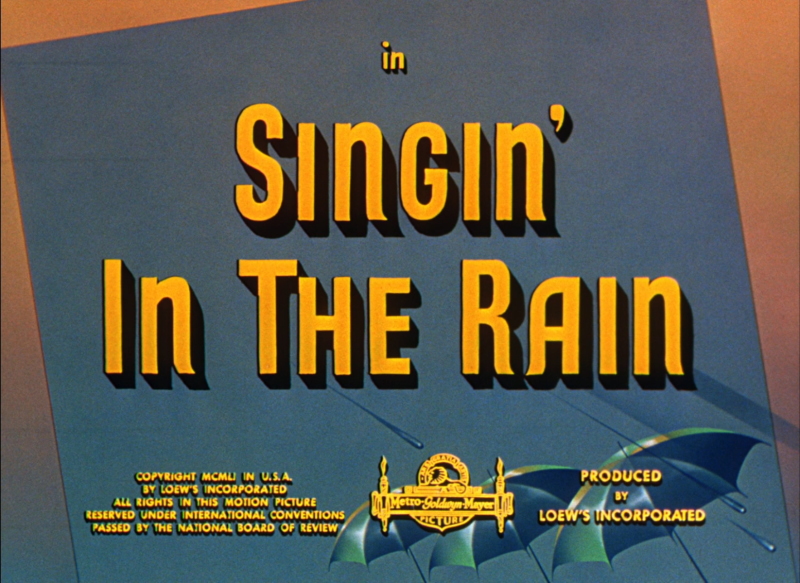
Screenshot of the Fortnight: "SINGIN' IN THE RAIN" (1952)

Donald O'Connor, Madge Blake, Gene Kelly,
and Jean Hagen in Singin' in the Rain.

Singin' in the Rain from MGM is widely considered to be the greatest movie musical of all time.  Co-directed by Stanley Donen and Gene Kelly and starring Kelly, Debbie Reynolds, and Donald O'Connor, it ranks 5th on the American Film Institute's list of the 100 greatest American films, behind Citizen Kane (1941), The Godfather (1972), Casablanca (1942), and Raging Bull (1980).  On the Sight & Sound-British Film Institute's list of the 200 greatest international films of all-time—"the only greatest movies list that most serious film critics take seriously" (Roger Ebert)—Singin' in the Rain is number 10, ahead of The Godfather (1972), The Searchers (1956), Seven Samurai (1954), Psycho (1960), Bicycle Thieves (1948), City Lights (1931), Casablanca (1942), and 83 others.

For the 1952 film year, the motion picture Academy did not even nominate Singin' in the Rain for Best Picture.  In fact, the movie received only two Oscar nominations—Best Supporting Actress (Jean Hagen) and Best Musical Score—and both nominees lost.  It was only the tenth-highest-grossing film in the U.S. and Canada and was poorly received by many critics who generally thought it was a mediocre follow-up to the previous year's Best Picture winner, An American in Paris, also an MGM musical and also starring Gene Kelly.  Not until its re-release in 1958 and Pauline Kael's review of it did Singin' in the Rain begin its rise from mediocrity to legendary status.

The Oscar race for Best Picture of 1952 was between High Noon (7 nominations) and The Bad and the Beautiful (6), with The Greatest Show on Earth (5) not seriously considered, even though it ended up winning the Oscar.  It is generally accepted that the two frontrunners canceled each other out and The Greatest Show on Earth won by default.  In its favor, the film was the highest-grossing movie in the U.S. and Canada.  On the other hand, it is telling that The Greatest Show on Earth took home 1 Oscar while The Bad and the Beautiful won 5 and High Noon won 4.

🌎   🌎   🌎

Gene Kelly was a taskmaster as a choreographer and a brute as a dance partner.  Cyd Charisse's husband could always tell whether she had been dancing with Kelly or Fred Astaire by the number of bruises on her body.  Though their public criticism of him was always half-joking, both Debbie Reynolds and Donald O'Connor complained to friends and family at the time that Kelly was a tyrant, overly demanding and inclined to belittle his fellow dancers in front of the rest of the cast and crew.  He reduced Debbie Reynolds to tears repeatedly.

🌎   🌎   🌎

The 1946 French film, Étoile sans lumière (Star without Light) bears more than a resemblance to Singin' in the Rain.  Edith Piaf plays a hotel maid in the 1920s named  Madeleine.  A famous actress, Stella Dora, and her lover-agent, are staying at the hotel.  Dora's career is on the decline, and furthermore, she doesn't have a good enough singing voice to survive the transition from silent films to talkies.  At the hotel she is desperate and suicidal.  The agent  later overhears Madeleine singing while she is scrubbing the lobby floor and he gets an idea: he and Dora can use Madeleine's singing voice from backstage while Dora performs in front of the cameras.  Madeleine's singing becomes an overnight sensation.  But having tied Madeleine to a Faustian bargain, Dora gets all the credit.  Madeleine receives no film credits, she cannot tell anyone that her voice is in the films, and she cannot sing in public any of the songs her voice has made famous.  It was a humiliating life sentence.  In Singin' in the Rain the consequences of the dubbing are comedic and romantic.  In Star without Light they are tragic.


🌎   🌎   🌎


Current imdb fns rank#90/250.


Sunday, September 6, 2020

Screenshots for a Fortnight: "THE PARALLAX VIEW" (1974) (07-20 September 2020)


The Parallax View (1974).  C: Gordon Willis.  D: Alan J. Pakula.

Questionnaire that opens a mysterious door to the truth in The Parallax View.

One evening in the winter of 1972-1973 I was walking up N. Hudson Avenue from Hollywood Boulevard, headed to my place at the Lido Apartments when I saw a sheet of paper with typewriting on it, lying in the dry gutter. I picked it up and looked at the front of it.  Hey, it's a Scientology questionnaire!  (The Scientology building was only a few blocks away.)  I love questionnaires, I said to myself.  I walked to the next street lamp, at the corner of Yucca Street, across the street from my apartment building, and stood underneath it to read.

I am informed and believe and thereon allege that this questionnaire originally had multiple sheets of paper and comprised a series of about 200 statements.  I had found only one sheet (2 pages) and I don't know how many statements.  I was supposed to agree or disagree with each one.  After a few seemingly innocuous statements, the questionnaire took a dark turn.  The statements became downright creepy.  Before long I realized who or what the Scientologists were looking for.  Anyone who answered these creepy statements a certain way had to be a psychopath.  I stopped reading: the portrait these statements were drawing sent a chill up my spine.  I quickly looked up and down N. Hudson and Yucca and then stared at the Lido Apartments parking lot across the street for several seconds.  I wondered if I was being watched.  I don't know why.  Maybe that statement in the questionnaire had gotten to me.  (Number 58 in the screenshot was on the Scientology questionnaire page I read.  Maybe all of them in the screenshot were.)  I folded up the paper, shoved it in my pocket, and resumed walking until I got home where I threw it away in my own trash can.  I didn't want any part of a scheme to help Scientologists recruit psychopaths.  (They were probably trying to weed out psychopaths.)  Meanwhile, I braced myself for a knock on my door that never came.
🌎🌎🌎

My wife and I saw The Parallax View (1974) on the big screen in 1974.  I thought it was a masterpiece.  I've seen it several times since then on streaming video (currently free with Amazon Prime).  Today, more than 40 years since I first saw it, I have a better knowledge of film and of masterpieces.  Today, I would say The Parallax View, while not a masterpiece, is nevertheless excellent.  At imdb.com, I have rated it 10 out of 10.

It is chock full of intrigue and a fair amount of action.  It has investigative journalism, pathos, suspense, mystery, drama, humor, poignance, blood, political corruption, assassination, and conspiracy, plus Warren Beatty in his smartass prime, Paula Prentiss, and Hume Cronyn.

🌎🌎🌎

Gordon Willis was one of the best cinematographers of the Modern Era.  His inspired camera shots in this film frequently carry the subtext of the story, as when the camera is zoomed out for a long shot to reveal the vast chasm between the blue-ribbon panel's conclusions (and themselves), on the one hand, and the reality we have witnessed on the other.

His credits include Klute (1971), The Godfather (1972), The Paper Chase (1973), The Parallax View (1974), The Godfather, Part II (1974), All the President's Men (1976) and a string of Woody Allen films from Annie Hall (1977) through The Purple Rose of Cairo (1985).
🌎🌎🌎
In the wee hours of June 17, 1972, a burglary occurred at the national Democratic Party headquarters inside the Watergate Hotel in Washington D.C. It led to a sea change in the way we view government that we're still fleshing out and examining.  That break-in, and the dogged probing by two reporters for the Washington Post, exposed to public light a criminal enterprise operating out of the basement of the White House, an enterprise run day-to-day by the two closest advisors to the President of the United States, Richard Nixon.

"Watergate," as the crime story came to be called, was a puzzle that Americans received in random pieces, one or two at a time.  The events and information the Post reported were published as soon as Bob Woodward and Carl Bernstein learned of them and received confirmation of the information from two additional sources.  As a result of this piecemeal uncovering of information, it was difficult, if not impossible, for Americans to fit the pieces together even after many of the pieces were in hand.  The full narrative of Watergate, with a synthesis of all the puzzle pieces, would have to await the monumental publication of Woodward's and Bernstein's All the President's Men in 1974, their blockbuster account of what they'd done and what they'd found, a veritable handbook for modern investigative journalism.

Two random, seemingly unrelated pieces of the puzzle were reported in the first few days of the story in June 1972.  First, one of the Watergate burglars had a personal check for $25,000 made out to the Committee to Re-Elect the President, which was signed by and drawn on the bank account of the midwest fundraising chairman for the Committee.  (Why would a burglar be carrying a check like that?)  And second, the burglars had expensive "bugging" equipment in their possession: they had been trying to install listening devices in the phones of the Democratic headquarters when they were caught.  Instantly, "bugging"—eavesdropping with listening devices—entered the American language and consciousness.  Whatever the burglars were up to, they were in the "bugging" business.

In more of the random bits of reporting, we learned that the White House's criminal operatives had planned to illegally "bug" many of Nixon's perceived enemies, including Democratic politicians, celebrities, news reporters, and ordinary citizens.  And if ordinary citizens were under surveillance, anyone could be "bugged."

The Francis Ford Coppola film The Conversation (1974) tapped into the angst and fear and paranoia beginning to infect the minds of everyday people.  The Conversation is a character study of a professional "surveillance technician" hired by a corporate executive to spend his workdays spying on two ordinary people.  I don't know how young people react to The Conversation today, how they feel when the movie is over.  But back then, when the movie was over and my wife and I walked to our car in the underground parking lot, I could've sworn I heard footsteps following us.

The Parallax View (1974) came on the heels of The Conversation.  Despite the milieux being in the private sector, both movies were aimed at baby boomers who were politically aware citizens,  shellshocked by (1) the combination of a string of assassinations, (2) a conviction that our government was somehow involved, (3) the Vietnam War deceptions, and (4) the Nixon White House criminal enterprise, with a growing sense of paranoia as well as a fear or resignation that the trust we had once placed in our basic institutions, and in the people who ran them, was lost forever.
🌎🌎🌎
Director Alan J. Pakula's next film after The Parallax View was a painstakingly faithful adaptation of the Woodward and Bernstein book, All the President's Men (1976), the third film in what critics dubbed Pakula's "paranoia trilogy," which began with Klute (1971).
🌎🌎🌎

Screenshot of the Month: "L.A. Confidential" (1997)

Russell Crowe ("Officer Bud White") dangling  Ron Rifkin ("District Attorney Ellis Loew") out an L.A.P.D. upper  floor o...